
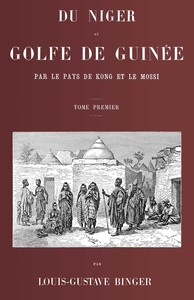
Du Niger au golfe de Guinée par le pays de Kong et le Mossi, tome 1 (de 2)
If you think your last work trip was rough, wait until you hear about Louis Binger's assignment. 'Du Niger au golfe de Guinée' is the real-time journal of his two-year expedition (1887-1889) across what is now Burkina Faso, Côte d'Ivoire, and Ghana. Sent by the French government, his goal was simple on paper: travel from Senegal to the Gulf of Guinea and fill in the gigantic blank spaces on the map. In reality, it was a daily gamble with disease, uncertain alliances, and sheer physical endurance.
The Story
Binger starts his journey along the Niger River and heads south. The book follows his progress day by day. He isn't leading an army; it's a modest caravan. A huge part of the narrative is his interactions with the rulers and people of the regions he passes through, like the famed Kong Empire and the Mossi kingdoms. He's part diplomat, part spy, and full-time explorer. He describes landscapes, trade routes, and social structures with the eye of someone trying to understand, not just conquer. The tension is constant: will the next village be friendly? Is the water safe? Can he keep his instruments and notes hidden? It's a ground-level view of exploration, stripped of any later romanticizing.
Why You Should Read It
What grabbed me was the book's honesty. This isn't a polished, heroic memoir written decades later. It's the immediate account—with all its frustrations, fears, and moments of wonder. You feel the exhaustion of a long march and the relief of a peaceful welcome. Binger records what he sees without the heavy colonial filter you might expect; there's a genuine curiosity about the cultures he encounters. Reading it, you become acutely aware that you're witnessing the final moments of these independent African kingdoms before the colonial scramble truly changed everything. It's a snapshot taken from the inside.
Final Verdict
Perfect for readers who love real adventure stories and primary source history. If you enjoyed the travelogues of someone like Sir Richard Burton, or the immersive feel of Into the Wild, you'll appreciate this. It's not a light read—the detail can be dense—but it's incredibly rewarding. You're not getting a historian's analysis; you're getting the explorer's own voice, which makes the journey feel startlingly fresh and personal, even after 130 years.
This is a copyright-free edition. Share knowledge freely with the world.
Ethan Clark
6 months agoHaving read this twice, the plot twists are genuinely surprising. Thanks for sharing this review.
William Thomas
1 year agoFive stars!







Daniel Martinez
1 year agoVery helpful, thanks.